Meet Rick Troia: Leading Our School's Next Chapter
August 06, 2026
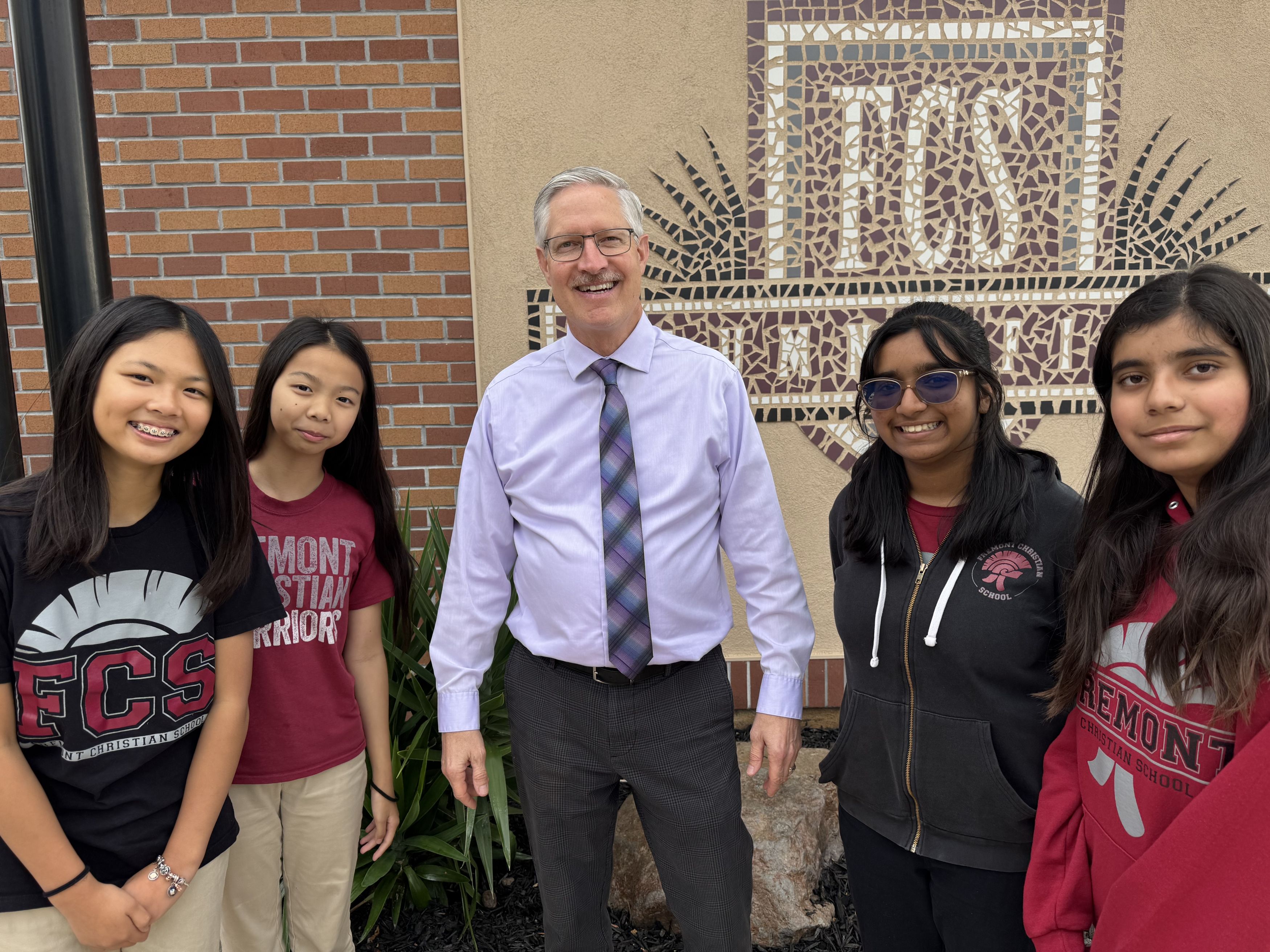
When Rick Troia accepted his first teaching position more than 35 years ago, he never imagined it would lead to a lifelong career in Christian education.
Fresh out of college with a business degree, Mr. Troia expected to work in marketing. While coaching sports at a Christian school, however, he was offered the opportunity to teach high school math.
"By my second year of teaching in a Christian school, I knew this was what I wanted to do for my career," he says.
That calling has since grown into more than three decades of service as both a teacher and administrator. After leading both the elementary and secondary campuses at Fremont Christian School, Mr. Troia now begins a new chapter as Head of School, succeeding Dr. Tricia Meyer.
Rather than focusing on change, Mr. Troia sees his role as building on the strengths that have made Fremont Christian a trusted choice for Bay Area families.
Building on a Strong Foundation
Mr. Troia was first drawn to FCS because of its long-standing reputation for combining strong academics with a Christ-centered education.
"I thoroughly enjoy helping to provide a stellar, Christian-based, college-prep education to a diverse group of families in the Fremont area," he says.
That mission remains at the heart of his vision for the school's future.
He believes one of FCS's greatest strengths is its ability to offer the opportunities of a much larger school while maintaining the close relationships of a smaller one.
"We provide a large array of programs and opportunities that most small schools with small class sizes do not offer," he says. "That enables our staff to give a considerable amount of individualized instruction and attention to students and families while still giving students the freedom to be involved in a wide range of programs and leadership opportunities."
Preparing Students for Success
Academic excellence will continue to be a cornerstone of the Fremont Christian experience.
Students have access to numerous Advanced Placement courses, including new offerings in AP Finance and AP Cybersecurity. If a student wishes to pursue an AP course not currently offered on campus, FCS provides opportunities to take it online. High school students can also participate in dual enrollment through Ohlone College, earning college credit while still in high school.
The school's commitment to academic rigor has earned Fremont Christian AP Platinum recognition year after year, reflecting both the breadth of its AP program and students' strong performance on AP exams.
But for Mr. Troia, preparing students means more than academic achievement alone.
"I would tell prospective families about the different academic, leadership, and extracurricular programs we offer," he says. "Together, they provide students with an outstanding, well-rounded education."
A Community Where Every Student Is Known
While programs and academics matter, Mr. Troia believes relationships are what truly set Fremont Christian apart. Because of the school's low student-to-staff ratio, teachers and staff have the opportunity to know students personally—not only in the classroom, but also by supporting them at extracurricular activities and school events.
"It is my desire that students feel safe, welcomed, and loved every time they step onto campus," he says. "I make every effort to greet them each morning with excitement and positivity."
That same philosophy shapes his leadership style. Teachers describe Mr. Troia as approachable, sincere, understanding, and encouraging—someone who listens well, brings people together, and supports those around him. Having served as both an elementary and secondary principal, he believes those experiences have prepared him to lead the entire school collaboratively.
Looking Ahead
As he looks toward the future, Mr. Troia hopes Fremont Christian continues to be recognized for far more than academic success.
"I hope people will see how FCS continues to show the love of Jesus through word and action," he says. "I hope they see a school that thrives with academic excellence while offering a well-balanced education—in mind, body, spirit, and sense of community."
Most of all, he hopes families experience what has drawn him to Christian education for more than three decades: a school where students are challenged academically, encouraged spiritually, and genuinely known.
Posted in
News & Announcements
A Tribute to Dr. Raymond Meyer: 36 Years of Faith, Leadership & Teaching
June 04, 2026
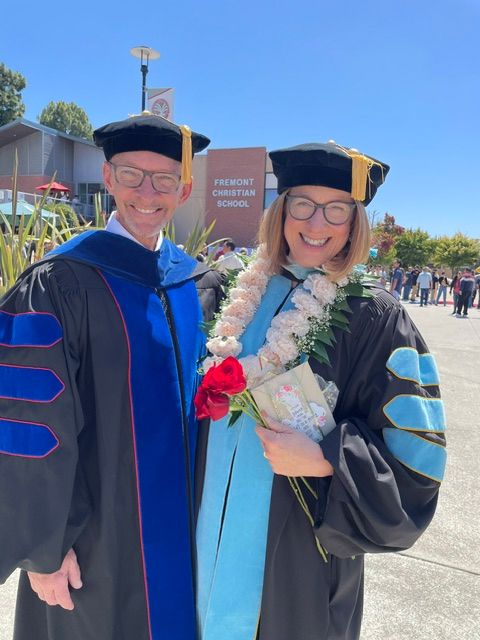
The following is a speech given by Nick Liston, FCS social studies teacher, at the retirement party for Dr. Raymond Meyer. Dr. Meyer served for 36 years in roles including pastor, teacher, Biblical integration specialist, and FCS secondary campus principal. Parts of the speech were edited for clarity and brevity.
Ray and I accepted teaching positions at Fremont Christian School just weeks apart in the summer of 1989. 1989 was a very different time from today—no cell phones, no internet. FCS had yet to discover air conditioning. Students did not have to wear uniforms, but teachers were required to wear ties. We complained when the price of gas crept over a dollar a gallon. A hamburger at McDonald’s ran about fifty cents, which may explain why we were starting to have trouble fitting into a pair of Levi’s 501 button-fly jeans, which were selling at just under $20.
On November 9, the people of East and West Germany rose up and tore down the Berlin Wall, one of the most repressive symbols of the Cold War that had gripped the world for over 40 years. And while Ray constantly tells me “Correlation is not causation,” I find it very hard to believe that the addition of two such stellar intellects to the faculty of Fremont Christian had nothing to do with the downfall of Communism just ten weeks hence.
Now, 37 years later, I am reminded of the words of another icon from the 1980s, Ronald Reagan, who once said of the armed forces, “Some people wonder all their lives if they’ve made a difference. The Marines don’t have that problem.” I would argue the same could be said of teachers. And I would say that is especially true of the man we honor here today.
Throughout our teaching careers, Ray and I have shared a lot. On numerous occasions, our classrooms have had an adjoining wall. We often taught the same grade levels: one decade teaching junior highers, another decade juniors and seniors. We have shared complaints. “How many more days until spring break?” “The copier is jammed…again.” And year after year, we have parroted the musical Bye-Bye Birdie in asking “What’s the matter with these kids today?"
We’ve also shared the unique experience of teaching one another’s children. You can learn a lot about a person when you teach their kids. Having taught Jake in both eighth and twelfth grade as well as coaching him in soccer, I got to inspect Ray’s parenting skills up close. They are impressive. Jake’s curiosity and work ethic in the classroom, his warm personality, his leadership as a captain of the soccer team—which came within one goal of a section title—were clear reflections of the home that Ray and Tricia had created.
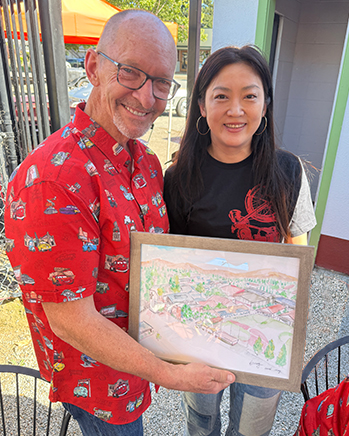
On the flip side, Ray also taught all four of my children. I would like to say…I’m sorry. We tried. There were just too many of them.
Two memories come to mind right away. The first was the Sunday that Ray asked my son Isaac to play piano at the church where he was a pastor. My entire family attended First Baptist that week, sitting in the second row. When Ray wrapped up the sermon, I leaned over to my daughter and whispered, “What a great sermon.” “Yeah,” she said. “We had that lesson in class last week.”
Ray’s double-dipping aside, that moment reminded me how fortunate we were to have our kids in Ray’s Bible class, to have their faith shaped, stretched, and deepened five days a week by someone who truly knows Scripture and knows how to teach it.
The second memory involves my eldest son, Isaiah. Following his freshman year of college, Isaiah took a missions trip to the interior of Tanzania. His team of 12 college students traveled from village to village, meeting with the few Christians who lived there and often holding a short worship service followed by a message for these makeshift congregations.
The third day in, the group leader came over to Isaiah about halfway through the worship service and whispered, “Greg was supposed to do the sermon tonight, but he’s sick. Can you cover? You’re on in twenty minutes.” Isaiah just smiled. “Dad,” he would later tell me, “I had been throwing together devotionals in Dr. Meyer’s class in way less than twenty minutes. I grabbed a scrap of paper, jotted down my three points, and then gave those people some Jesus.”
So maybe Ray and I didn’t cause the Berlin Wall to be torn down back in 1989. But I do know the impact Ray has had on my children—and the thousands of other students who have sat in the pews of his classroom.
And while some people may wonder all their lives if they’ve made a difference, Ray won’t have that problem. Because Ray is a teacher. Ray is a great, great teacher.
Posted in
News & Announcements
A Legacy of Faith, Leadership & Lifelong Impact: Honoring Dr. Tricia Meyer
May 29, 2026
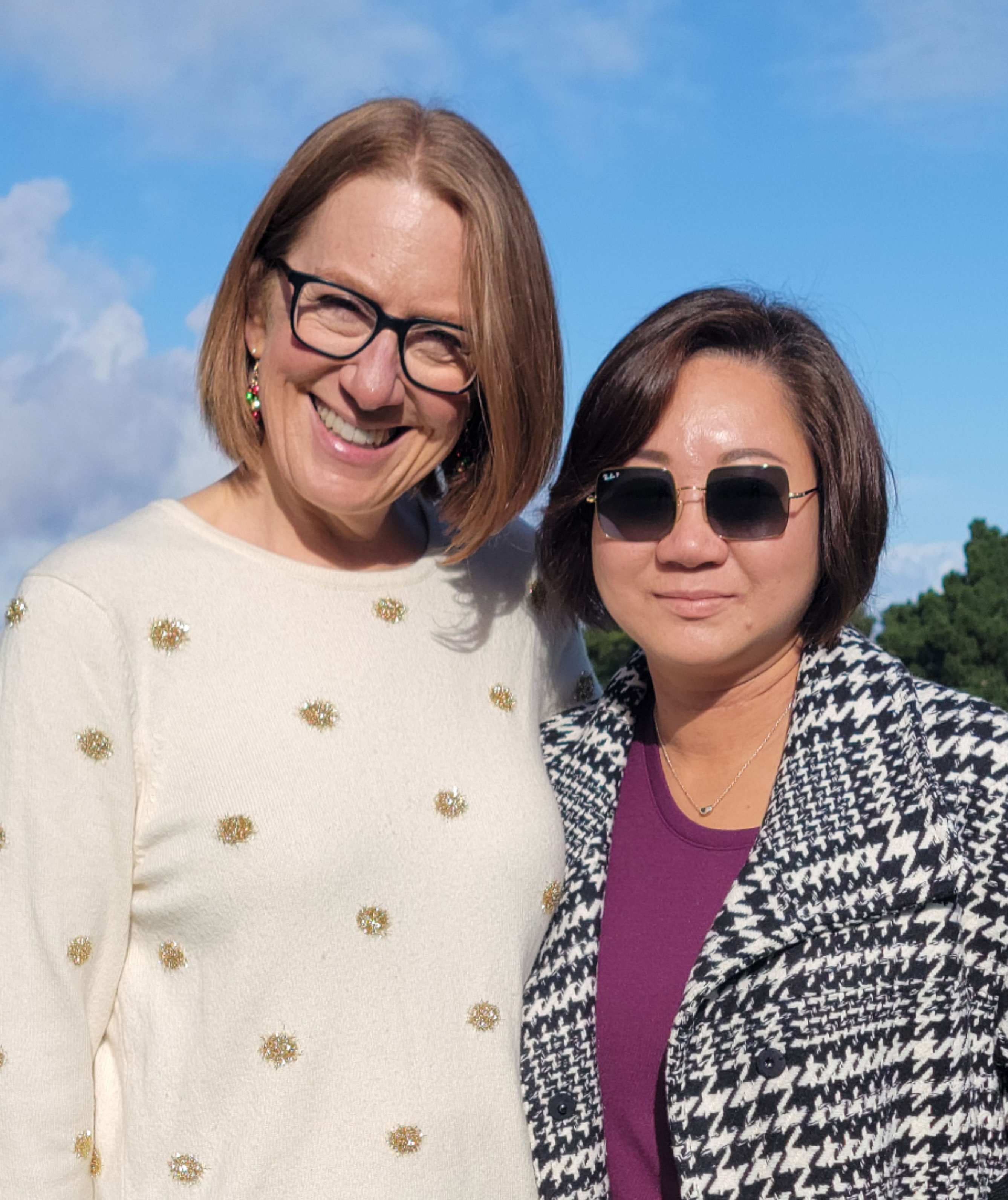
After more than three decades of faithful service, Dr. Tricia Meyer is stepping into a new chapter. While this transition is tied to Dr. Raymond Meyer’s retirement, it also marks the close of an extraordinary season of Dr. Tricia Meyer’s leadership, influence, and presence on campus.
For many, Dr. Meyer has been a teacher, administrator, and leader. For me, she has been all of those, and so much more.
I first knew her as Ms. Miller when I was a high school student, at a time when I was one of the very few international students at Fremont Christian School. In that season, her presence stood out, not only for her excellence in the classroom, but for the care and intentionality she showed in making students feel seen and supported.
Years later, after moving back to the United States and deciding to return to college, I reconnected with her, now Dr. Meyer, as she helped me obtain my transcripts and take the next step forward. What could have been a simple administrative interaction became, once again, a moment of encouragement and guidance.
Life came full circle when I later joined Fremont Christian as a staff member around the time I welcomed my first child. In that season, she was no longer just my teacher but also my employer and, over time, she became a trusted mentor and dear friend. Somewhere along the way, Dr. Meyer simply became Tricia.
She has walked alongside me through some of the most pivotal moments of my life, offering steady support, wisdom, and encouragement.
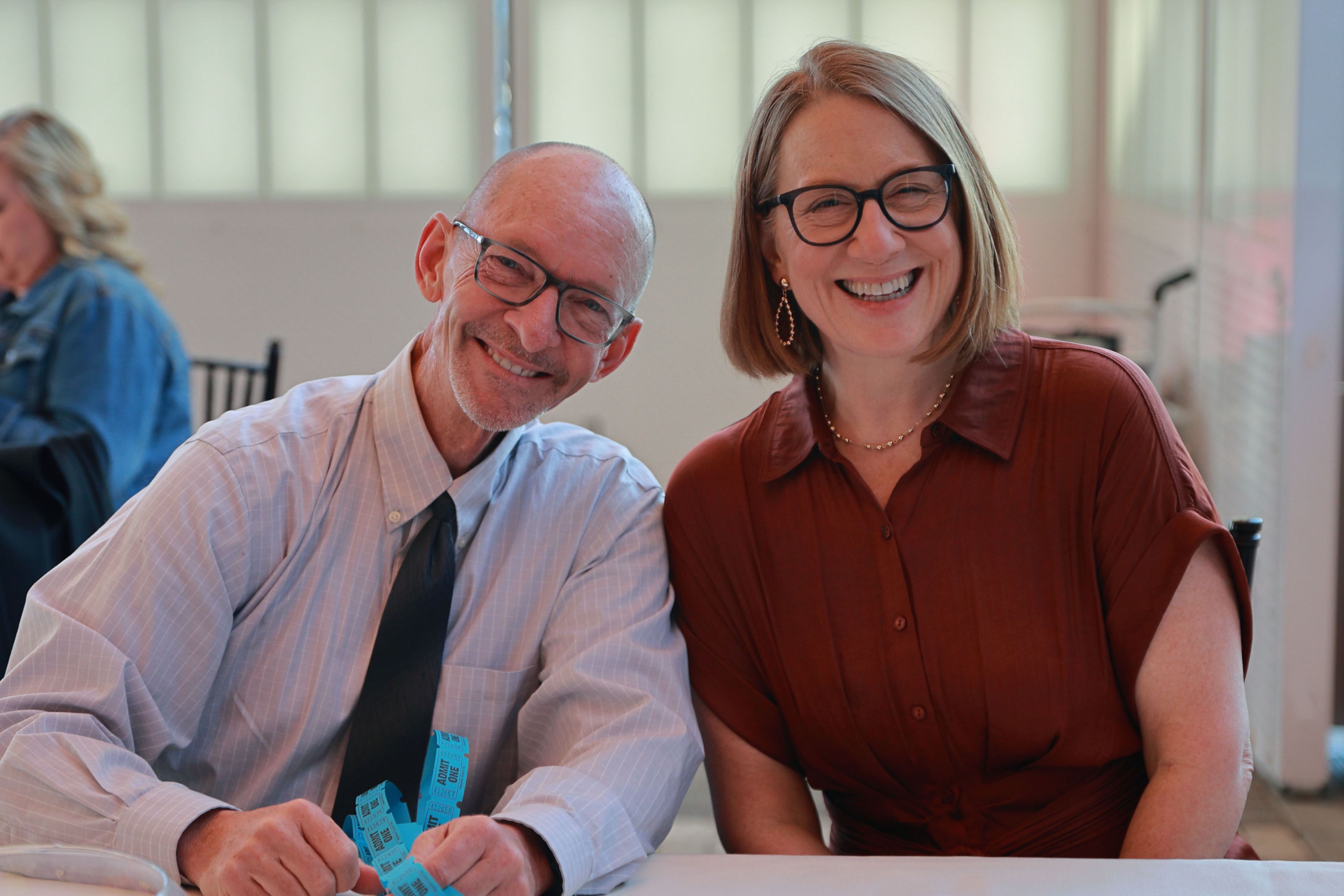
Dr. Meyer’s influence extends far beyond academics or administration. She has a unique ability to invest deeply in people, to lead with both strength and compassion, and to build a community rooted in faith and purpose. It was because of her impact and the culture she helped cultivate that I chose Fremont Christian School for my own children, a decision that reflects the trust and respect so many families share.
As she and Dr. Raymond Meyer prepare to leave Fremont, this transition is bittersweet. While we celebrate this new chapter for their family, her absence will be deeply felt across the school and community. Still, her legacy will continue to live on in the countless lives she has touched.
Ms. Miller. Dr. Meyer. Tricia. Each name reflects a different season, but the same unwavering heart for people, for education, and for faith.
Thank you for being a teacher, a leader, a mentor, and a friend. Your impact reaches far beyond the years you have served. It lives on in the people and community you helped shape, including my own life, in ways I will always carry with me.
From Dr. Tricia Meyer
It has been the privilege of a lifetime to love this school, its students, and its staff. When my grandmother knew Jesus was calling her to come to this church in the early 1960s, she could not have known a school would be started and that her daughter and her granddaughter would spend their entire careers as leaders in that place. But she was responsive to God’s call in that decision, and many decisions by my parents, my husband, myself, and others were used by God to give me a life in and around Fremont Christian School, where I have known His overwhelming love. I am so, so grateful and am very excited to see what happens next because He goes with us.
Posted in
News & Announcements
From FCS to UCLA in 3 Years
May 07, 2026
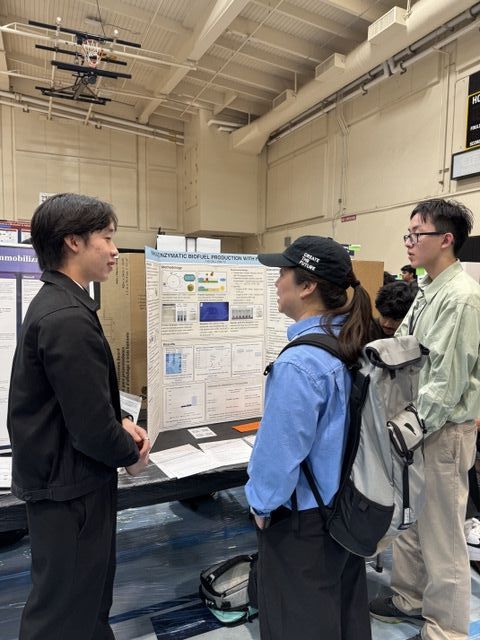
For Daniel Du, the path to college didn’t follow the traditional four-year timeline. Instead, it was the result of careful planning, consistent effort, and a willingness to take advantage of every opportunity available to him. Now, after just three years of high school, Daniel will be heading to UCLA—joining his older brother Matthew, Fremont Christian School’s valedictorian, on the same campus.
Daniel’s journey at Fremont Christian began in eighth grade after years of homeschooling. The transition, he says, was immediate and meaningful. “I was really able to connect with a lot of my peers, and especially my teachers,” he says. “Every single teacher I’ve met genuinely cares about me—not just academically, but also about my well-being.” Over the past four years, Daniel has immersed himself in both academics and campus life, participating in varsity volleyball, class council, and scientific research.
A Clear Goal, Early On
Daniel began thinking about accelerating his path to college as early as eighth grade, inspired in part by his older brother. From the start, he approached high school with a plan, taking advanced courses early and building toward his goal of applying to college a year ahead of schedule.
At Fremont Christian, Daniel found an environment that allowed him to move at an accelerated pace. Flexible scheduling and access to advanced coursework made it possible for him to take on college-level material earlier than most students. “I was able to take AP Pre-Calculus as a freshman,” he explains. Lab periods also gave him the ability to complete online courses independently and at an accelerated pace.
Small class sizes played a significant role in his success. In one AP science class, there were only four students, allowing for close mentorship. “Having a teacher who genuinely cares and has the time and resources to support you was one of the most important parts of my academic success,” he says.
Despite his demanding schedule, Daniel remained active in campus life. Through athletics, leadership, and friendships, he found balance and community. He also pursued opportunities beyond school, including serving on the Fremont Police Department’s youth advisory board, a program that brings students together with local law enforcement to discuss community issues. The experience allowed him to gain a broader perspective on complex issues. “It showed me that everything is nuanced,” he says.
Research at a Higher Level
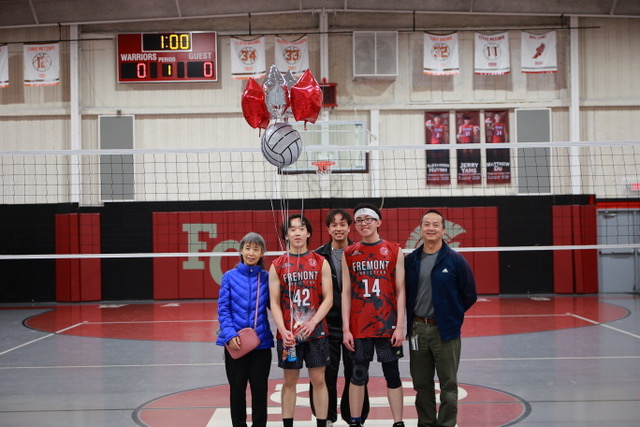
Daniel’s interest in science extended beyond the classroom. At Fremont Christian, he gained access to laboratory equipment typically reserved for college settings, enabling him to conduct hands-on research in biotechnology. Using tools such as PCR and gel electrophoresis systems, he developed advanced skills and is now preparing a research project for publication.
He also helped introduce younger students to these lab techniques and founded a research club on campus, creating opportunities for others to explore science through interactive demonstrations and discussion.
A Unique Academic Path
Daniel emphasizes that graduating early is not for everyone. It requires independence, initiative, and a willingness to take risks. “You have to be willing to do things differently,” he says. For him, that meant applying for opportunities even when the outcome was uncertain.
This fall, Daniel will study psychobiology at UCLA, with plans to pursue a career in medicine that combines research and clinical work. He looks forward to meeting new people and continuing to explore his interests at a larger university.
His journey reflects both personal determination and the opportunities available at Fremont Christian. As Daniel puts it, “There are so many opportunities here—you just have to actively seek them out and make use of them.”
Posted in
FCS Student Spotlight